 blog
blog
Is Building a Custom Home Worth It in 2026?
Table of Contents
- Build vs Buy a House in 2026: What Actually Makes Sense
- Custom Home Building Costs in 2026: What Your Budget Really Buys
- Custom Home Construction Timeline: How Long It Really Takes
- Hidden Costs of Building a House That Catch Buyers Off Guard
- The Long-Term Value Case for a Custom Home
- When Building a Custom Home Is Not Worth It
- Conclusion: Making the Call for Your Family
- Frequently Asked Questions
Last Updated: October 9, 2026
Build vs Buy a House in 2026: What Actually Makes Sense
Deciding whether building a custom home is worth it in 2026 comes down to three things: your timeline, your tolerance for decisions, and how long you plan to stay. For buyers who want a house that fits how they actually live, construction often wins. For buyers who need to move in 90 days, it rarely does.
At RTS Builders, LLC, we talk with families across the Augusta area every week who are weighing a resale purchase against building from scratch. The honest answer is that neither option is universally better. What matters is matching the path to your situation.
A custom home is a residence designed and built to a specific owner's plans, lot, and specifications rather than selected from a builder's existing inventory. That distinction drives everything else: cost, schedule, and long-term satisfaction.
Below, we break down costs, timelines, hidden expenses, and the long-term value case so you can make the call with clear eyes.
Custom Home Building Costs in 2026: What Your Budget Really Buys
Custom home building costs in 2026 depend on square footage, site conditions, finishes, and how much design work you need. There is no single national number that applies to your lot, which is why any flat "cost per square foot" figure you see online should be treated with suspicion.
What your budget actually buys breaks into four buckets:
- Land and lot preparation - clearing, grading, utilities, and permits
- Structure - foundation, framing, roofing, windows, and exterior
- Systems - electrical, plumbing, HVAC, and insulation
- Finishes - cabinetry, flooring, fixtures, and trim
The finishes bucket is where budgets move the most. Two homes with identical footprints can differ substantially in final cost based on cabinet grade, countertop material, and fixture selection. We recommend setting a finishes allowance early and tracking every selection against it.
Land, Site Work, and What Comes Before the First Nail
Site work is the least glamorous line item and the one that surprises buyers most. Before framing starts, your lot needs evaluation for drainage, soil conditions, and utility access.
A few things that drive site costs:
- Whether the lot slopes and needs grading or retaining
- Distance to existing water, sewer, and power connections
- Whether a septic system or well is required
- Local permitting and inspection requirements for your jurisdiction
For anyone comparing build vs buy a house in 2026, this phase is where the two paths diverge most sharply. A resale home has already absorbed these costs. A new build surfaces them as line items you approve one at a time.
Custom Home Construction Timeline: How Long It Really Takes
A typical custom home construction timeline runs from several months to well over a year, depending on design complexity, permitting speed, and material availability. Design and permitting alone can consume a meaningful chunk of that window before a shovel touches the ground.
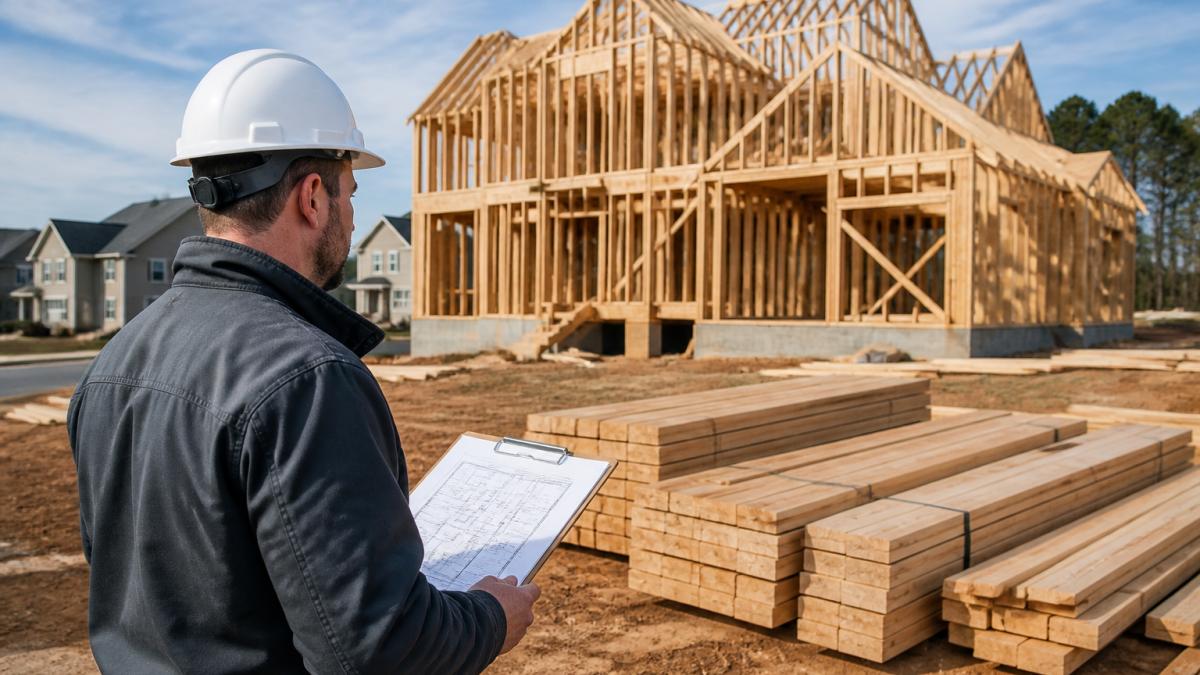
The phases generally move in this order:
- Design and plan development
- Permitting and approvals
- Site work and foundation
- Framing and rough-in
- Insulation, drywall, and finishes
- Final inspections and walkthrough
Weather, inspection schedules, and change orders are the three biggest schedule variables. Change orders in particular have a compounding effect: a decision made late can stall multiple trades at once.
Hidden Costs of Building a House That Catch Buyers Off Guard
The hidden costs of building a house rarely appear in the headline price. They show up in the details: temporary housing during construction, utility connection fees, landscaping, window treatments, and appliance packages that were never in the base contract.
Other items buyers forget:
- Permit and impact fees that vary by jurisdiction
- Survey and engineering costs required before site work
- Driveway and walkway concrete not included in the base build
- Contingency for unexpected site conditions
The Consumer Financial Protection Bureau's guide to construction loans is worth reading before you sign anything, because construction financing works differently from a standard mortgage and the draw schedule affects your cash flow.
We tell every client the same thing: budget a contingency and do not spend it on upgrades. If the project comes in clean, you have a cushion. If it does not, you are covered.
The Long-Term Value Case for a Custom Home
Long-term value from a custom home comes from three places: getting exactly the layout you need, avoiding the cost of renovating someone else's choices, and building systems and materials to a standard you selected.
Consider what you avoid by building new. You are not inheriting a roof that is near the end of its life, an HVAC system sized for a previous owner, or a floor plan that almost works. Those avoided costs are real even though they never appear on a spreadsheet.
The U.S. Department of Energy's guidance on home energy efficiency explains how insulation, window selection, and HVAC sizing affect long-term operating costs. Building to current standards from day one means you are not paying to retrofit later.
For families planning a forever home, that math tends to favor building. For buyers who may relocate within a few years, it usually does not.
When Building a Custom Home Is Not Worth It
Building is the wrong choice when your timeline is short, your budget has no flexibility, or your plans are still vague. If you need to be in a home within a few months, a resale purchase will almost always get you there faster.
Here is a quick way to sort it out:
| Your Situation | Better Path | Why |
|---|---|---|
| Need to move within 90 days | Buy existing | Construction timelines rarely compress that far |
| Fixed budget, no contingency | Buy existing | Site surprises have nowhere to go |
| Plan to stay 10+ years | Build | You capture the value of getting it right |
| Specific accessibility or layout needs | Build | Resale inventory rarely matches exactly |
| Lot already owned | Build | You avoid double transaction costs |
If two or more rows point to "buy existing," that is probably your answer for now. That does not mean building is off the table forever.
Conclusion: Making the Call for Your Family
The hardest part of this decision is not the math. It is accepting that the right answer depends on your specific timeline and plans, not on what worked for a neighbor or a forum post.
If you are leaning toward building, RTS Builders, LLC can walk you through the process from lot evaluation to final walkthrough. As a licensed residential contractor with over 10 years of residential and commercial construction experience, we lead projects with hands-on planning, clear communication, and organized job sites, and we work with trusted subcontractors to keep projects on schedule. Robert, our Founder and Director, stays involved from the first conversation to the final inspection.
Get started with RTS Builders, LLC and build a home that fits how your family actually lives.
Frequently Asked Questions
Is it cheaper to build a custom home or buy one in 2026?
It depends on what you compare. Existing homes carry upfront purchase prices plus renovation costs if the layout does not fit your family. A custom home starts with land, site work, permits, and construction, so the entry number is higher. The trade-off is that you pay for exactly what you want instead of fixing someone else's choices. Talk to a licensed residential contractor about your specific lot and plan before assuming either path is cheaper.
How much does it cost to build a custom home in 2026?
Custom home building costs in 2026 depend on square footage, lot conditions, finish level, and local labor rates. A flat lot with standard finishes costs far less than a sloped site needing extensive grading or a home with high-end cabinetry and stone throughout. Because pricing varies that widely by project, the honest answer is to get a detailed line-item estimate based on your plans. RTS Builders, LLC can walk you through what drives your specific number.
How long does a custom home construction timeline usually run?
Most custom homes take several months of planning and permitting before ground breaks, then months of construction depending on size and complexity. Weather, material lead times, and inspection schedules all affect the custom home construction timeline. A builder who maps out each phase and communicates schedule changes early keeps the project from dragging. Ask for a written schedule with milestones before you sign anything.
What hidden costs of building a house should I plan for?
The hidden costs of building a house often include site prep surprises like poor soil or drainage issues, utility connections, permit fees, landscaping, and temporary housing during construction. Change orders also add up when you adjust plans mid-build. Setting aside a contingency fund of at least 10 to 15 percent of your construction budget protects you from getting blindsided when unexpected issues come up.