 how-to
How to Choose a Contractor for a Room Addition
Last Updated: October 28, 2026
Quick Summary
To learn how to choose a contractor for a room addition, start with a written scope of work, then screen candidates in order: verify license, insurance, workers' comp, and business registration before checking addition-specific experience, references, and communication. Request line-item written bids and compare scope, allowances, exclusions, and warranty terms, not just price.
- Define your scope of work in writing before calling any contractor, so every bid targets the same project.
- Gather six to eight candidates from referrals, a builder directory, your licensing board, and online reviews.
- Ask for three references from room additions finished in the last two years and call at least two.
- Require line-item bids separating labor, materials, permits, cleanup, and disposal so bids are comparable.
- Tie payments to completed milestones and hold final payment until the punch list is complete.
Table of Contents
- Start With a Clear Plan Before You Screen Anyone
- What a Room Addition Contractor Actually Does
- Use a Room Addition Contractor Checklist to Screen Candidates
- Step 1: Build a Candidate List From Multiple Sources
- Step 2: Run the Credential Gate Before You Call
- Step 3: Screen for Room-Addition-Specific Experience
- Step 4: Check References and Reviews With a Filter
- Step 5: Confirm Project Management and Communication Expectations
- Step 6: Get a Written Bid and Compare Scope, Not Just Price
- Questions to Ask a Home Addition Contractor Before You Hire
- Review References, Reviews, and Reputation
- How to Compare Contractor Bids Without Getting Fooled
- The Home Addition Contract Checklist: Terms That Protect You
- Get Your Room Addition Planned Right From the Start
- Frequently Asked Questions
Start With a Clear Plan Before You Screen Anyone
The worst room addition projects start with a phone call, not a plan, and that's exactly why learning how to choose a contractor for a room addition begins with knowing what you want built.
A clear plan takes a weekend, not a month, and it's the best way to learn how to choose a contractor for a room addition: a defined scope turns vague promises into comparable numbers.
Define Your Scope of Work and Project Requirements
Your scope of work is the written description of what gets built: square footage, room type, layout, finishes, and anything else you expect to see when the dust settles.
A solid scope answers these questions:
- What type of addition? (bedroom, primary suite, kitchen expansion, garage, sunroom)
- How many square feet, and where on the house?
- What finish level? (builder-grade, mid-range, custom)
Even a rough one-page scope beats a verbal wish list, because every contractor bids against the same target.
Confirm Zoning, Permits, and Feasibility First
Before you fall in love with a layout, check whether the lot allows it. Zoning rules control setbacks, lot coverage, and height limits; building codes govern construction.
Call your local planning office and ask three questions:
- Does my lot meet setback and coverage rules for this addition?
- What permits does a room addition require here?
- Are there any easements or floodplain limits on my property?
Handle this early. A contractor can't fix a zoning problem you didn't check.
What a Room Addition Contractor Actually Does
A room addition contractor is the general contractor who runs your project from permits to final walkthrough: hiring and scheduling subcontractors, ordering materials, coordinating inspections, and keeping the job moving.
Most labor comes from specialty contractors, framers, electricians, plumbers, HVAC techs, drywall crews, roofers, whom your general contractor manages and answers for.
Some firms offer design-build services, where one company handles both drawings and construction. That setup cuts handoff delays, but it also means fewer checkpoints.
Use a Room Addition Contractor Checklist to Screen Candidates
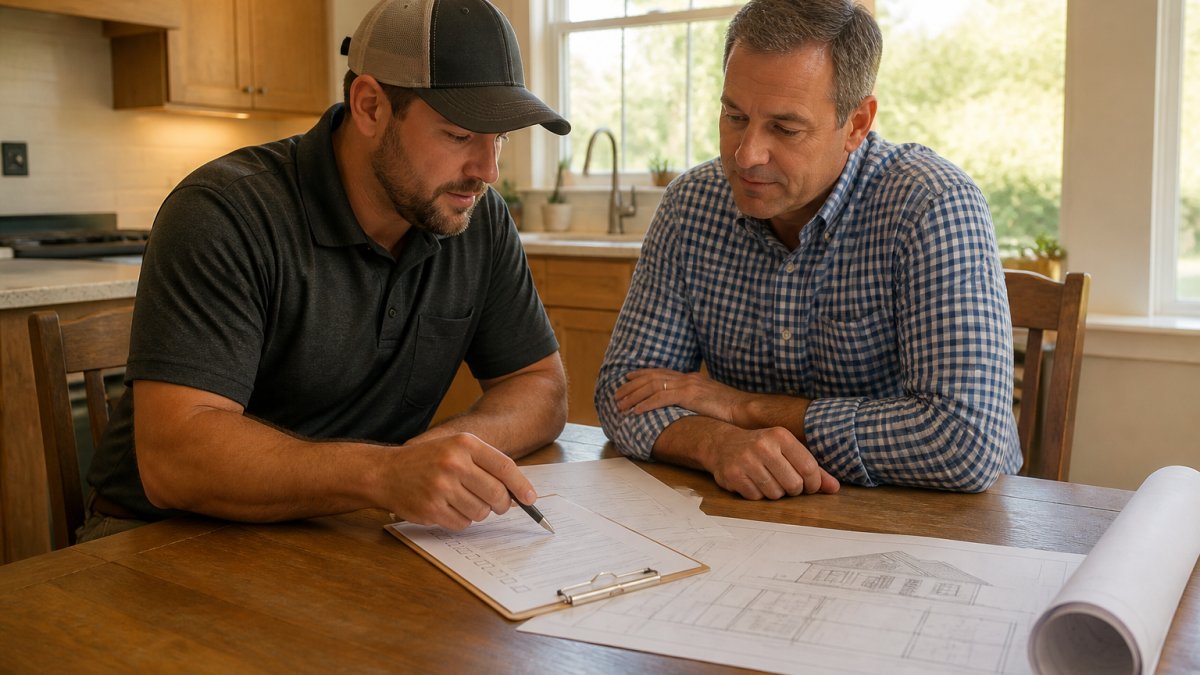
A room addition contractor checklist turns a gut-feel decision into a repeatable process.
Step 1: Build a Candidate List From Multiple Sources
Gather six to eight candidates from four sources: referrals from neighbors with recent additions, a local builder association directory, your state licensing board's public lookup, and online reviews. Cross-check each name against at least two sources; a contractor with no verifiable local footprint is a weak candidate.
Step 2: Run the Credential Gate Before You Call
Before a phone screen, confirm four things in writing:
- License: Ask for the license number and verify it yourself with the issuing state or local board. Confirm the license is active, covers residential work, and is held by the business entity, not just an individual who may not be on your job.
- General liability insurance: Request a certificate of insurance and call the insurer to confirm the policy is active and the coverage limit is adequate for a room addition.
- Workers' compensation: Confirm coverage for every worker who will set foot on your property. If a worker is injured and the contractor is uninsured, you can be exposed to a claim.
A mechanic's lien is the risk most homeowners miss: unpaid suppliers or subs can claim against your property even if you paid the general contractor in full. Ask each candidate to describe their lien waiver process in writing, including whether they collect waivers at each payment milestone.
Step 3: Screen for Room-Addition-Specific Experience
A contractor who has built a hundred decks may never have framed a two-story primary suite. Ask how many additions like yours they've completed in the last two years, then probe the technical qualifications that separate addition work from remodeling:
- Foundations and structural connections: How do they tie the new foundation into the existing structure, and how do they handle differential settlement?
- Roofing tie-ins: How do they flash and tie the new roof into the existing roofline to prevent leaks?
- HVAC capacity: Will the existing system handle the added square footage, or does the project require a load calculation and equipment upgrade?
Ask for photos of a comparable finished addition and which inspectors reviewed it. A qualified local contractor knows the inspection schedule and common failure points in your jurisdiction.
Step 4: Check References and Reviews With a Filter
Request three references from room additions finished in the last two years, not older projects or small repairs. Call at least two and ask: Did the project finish on schedule? Were there surprise costs, and how were they handled? How clean was the job site?
Then read recent reviews with a filter. One angry review among fifty is noise. A pattern of complaints about communication or change orders is a signal. Look for reviews that mention additions specifically.
Step 5: Confirm Project Management and Communication Expectations
Before comparing bids, ask who supervises the site day to day, how often you'll receive updates, how issues are escalated, and how subs are coordinated. A contractor who can't name a single point of contact and a regular update cadence is a communication risk, regardless of price.
Step 6: Get a Written Bid and Compare Scope, Not Just Price
Only after a candidate clears the first five gates should you request a written bid with a line-item breakdown separating labor, materials, permits, cleanup, and disposal. A lump-sum bid gives you nothing to compare.
Screening works best as a sequence of gates, with each step moving a candidate forward or removing them.
| Step | What to do |
|---|---|
| Step 1 | Gather six to eight candidates from four sources |
| Step 2 | Confirm license, liability insurance, workers' comp, business registration |
| Step 3 | Screen for room-addition-specific experience |
| Step 4 | Check references and reviews with a filter |
| Step 5 | Confirm project management and communication expectations |
| Step 6 | Get a written bid and compare scope, not just price |
Questions to Ask a Home Addition Contractor Before You Hire
The right questions separate a reputable builder from a smooth talker. Ask them in the first meeting and listen for specifics, not slogans.
- Who is my main contact, and how often will I hear from you?
- How do you handle change orders when hidden damage turns up?
- What's your realistic project timeline, and what could push it?
- Who pulls the permits, and who schedules inspections?
- How do you protect the rest of my house during construction?
- What's your payment schedule, and how much is due upfront?
- What warranty covers your work, and for how long?
- How do you handle labor shortages or material delays?
Vague answers to questions two and seven are the biggest red flags. Those are the two areas where homeowners get blindsided most often.
Review References, Reviews, and Reputation
References tell you what a contractor says about themselves. Reviews tell you what customers say when the contractor isn't in the room. You need both.
Call at least two references and ask open questions: Did the project finish on schedule? Were there surprise costs, and how were they handled? How clean was the job site?
Then read recent customer reviews with a filter. You can also read customer reviews of RTS Builders, LLC before trusting them with your addition.
How to Compare Contractor Bids Without Getting Fooled
The lowest bid is rarely the cheapest project. Learning how to compare contractor bids means reading the scope, not just the total: a bid is only comparable if every contractor prices the same work, materials, and terms. Normalize every bid against a single scope document before you look at price at all.
Normalize Every Bid Against Your Written Scope
Put every written bid side by side and check each line against your scope. If your scope calls for a 300-square-foot primary suite with a tiled shower and a mini-split, and one bid omits the mini-split, that bid isn't cheaper, it's incomplete. Ask each contractor to explain any gap in writing before you compare totals.
Compare Scope, Allowances, and Exclusions Line by Line
Three line items hide most of the difference between bids:
- Allowances: A bid may list a $5,000 allowance for flooring, which means the contractor will install whatever you pick up to that amount and charge you the difference. Two bids with the same total can have wildly different allowances. Ask what allowance amounts are built in and what happens if actual costs exceed them.
- Exclusions: Look for what the bid explicitly excludes, permits, site prep, demolition, disposal, painting, landscaping repair, or HVAC upgrades. An exclusion is a future change order waiting to happen.
- Line-item detail: A bid that separates labor, materials, permits, cleanup, and disposal is comparable. A single lump sum is not. Require line-item breakdowns from every candidate.
Compare Change Order Terms
Hidden damage is common in addition work, rot behind siding, an undersized panel, or soil requiring extra foundation work. Ask how change orders are priced and approved. The best terms require written approval before work proceeds, use a defined markup or hourly rate, and prohibit verbal approvals.
Compare Payment Schedules and Deposit Terms
A reasonable payment schedule ties payments to completed milestones, not calendar dates. Compare each bid's deposit and milestone structure, be wary of large upfront deposits, and confirm a final payment is held back until the punch list is complete.
Compare Completion Dates and Schedule Terms
Ask each contractor for a written start and completion date, and what could push the schedule, material lead times, inspection delays, or labor availability. A bid with no completion date gives you no leverage if the job drags.
Compare Warranty Terms
Warranty coverage varies widely. Ask what the warranty covers, how long it lasts, whether it covers labor and materials, and how claims are handled. A one-year workmanship warranty is common; a longer structural warranty is a differentiator. Get the terms in writing as part of the contract, not as a verbal promise.
Use a Cost Benchmark as a Reality Check
Ask each contractor to explain any gap before you sign. Use the average cost per square foot for home additions as a benchmark to judge whether bids are reasonable.
The Home Addition Contract Checklist: Terms That Protect You
A home addition contract checklist keeps the agreement honest. Before you sign, confirm these terms are spelled out in writing:
- Full scope of work with materials and finishes named
- Total price, payment schedule, and deposit amount
- Start date and completion date
Never pay a large deposit before the contract is signed. A reasonable schedule ties payments to completed milestones, not to calendar dates.
Get Your Room Addition Planned Right From the Start
The hardest part of a room addition isn't the framing or the drywall. It's trusting the person running the job. Get the plan, the vetting, and the contract right, and the build itself gets a lot calmer.
RTS Builders, LLC is a licensed residential contractor. The team emphasizes careful planning, dependable craftsmanship, and clear communication, works with trusted subcontractors, and maintains clean, organized job sites. Contact RTS Builders, LLC to schedule a consultation or request a quote.
Frequently Asked Questions
How many estimates should I get for a room addition?
Compare written bids line by line, not just the bottom number. Ask each contractor to explain what is included.
What should a room addition contractor's estimate include?
A solid estimate lists the full scope of work: demolition, foundation, framing, roofing tie-in, electrical, plumbing, HVAC, insulation, drywall, finishes, and cleanup. It should also state permit fees, a project timeline, payment schedule, allowances for fixtures and finishes, and how change orders are priced. Ask whether the bid is a fixed price or cost-plus. If anything is marked 'TBD' or excluded, get it clarified in writing before you sign.
How can I check a contractor's license and insurance?
Ask for the license number and verify it through your state's contractor licensing board or your local building department. Request a certificate of insurance showing general liability and workers' compensation coverage, then call the insurer to confirm the policy is active. Also ask for a lien waiver process in the contract.
What should be included in a home addition contract?
A home addition contract should include the detailed scope of work, plans and specifications, total price and payment schedule, start and completion dates, change order procedures, warranty terms, and who pulls permits. It should name subcontractors or state how they are selected, spell out cleanup and site responsibilities, and include a dispute resolution clause. Read every line before signing, and never pay a large deposit upfront.
Your addition is a big investment, and the right builder makes the difference between a smooth build and a stressful one. Get started with RTS Builders, LLC and build your addition with a team that plans carefully, communicates clearly, and finishes on schedule.