 how-to
Bathroom Renovation Timeline: Step-by-Step Process
Table of Contents
- Understanding Your Bathroom Renovation Timeline
- Phase 1: Planning and Setting Your Renovation Budget
- Phase 2: Permits, Inspections, and Pre-Construction Approvals
- Bathroom Remodel Timeline: Week-by-Week Breakdown
- Bathroom Renovation Steps: Hiring and Coordinating Contractors
- Bathroom Remodel Checklist: What to Track and Prepare
- Common Delays and How to Stay on Schedule
- Living Through Your Bathroom Renovation
- Frequently Asked Questions
Last Updated: October 12, 2026
Understanding Your Bathroom Renovation Timeline
A bathroom renovation timeline typically spans 8 to 12 weeks, depending on project scope, material availability, and how quickly decisions get made.
The timeline breaks into distinct phases: planning and budgeting, permits, demolition, rough-in work, installation, finishing, and final walkthrough. Each phase has dependencies, you can't tile before plumbing is done.
Most homeowners underestimate material lead times. Custom fixtures or special tile can take 4 to 8 weeks to arrive, so order materials early in the planning phase, not midway through construction.
Phase 1: Planning and Setting Your Renovation Budget
The planning phase typically takes 2 to 4 weeks and sets the tone for everything that follows.
Start by listing what needs to change. A cosmetic update, new paint, fixtures, and vanity, might take 3 to 4 weeks total.
Write down your must-haves versus nice-to-haves, a working toilet and shower versus heated floors and a spa-style soaking tub. Separating these helps you make faster decisions.
Defining Your Project Scope
Project scope is the clearest predictor of how long your bathroom renovation will take.
A cosmetic bathroom renovation typically includes:
- Repainting walls and ceiling
- Replacing fixtures (faucets, showerhead, towel bars)
- Installing new vanity and mirror
- Updating flooring with simple materials
This scope usually takes 3 to 5 weeks with minimal structural work.
A full gut remodel includes everything above, plus:
- Demolition and removal of all existing fixtures
- New plumbing and electrical rough-in
- Framing changes or wall removal
- Waterproofing and tile work
This scope typically takes 10 to 14 weeks with multiple trades working in sequence.
Bathroom size also affects timeline. A small powder room moves faster than a large primary bathroom, though tight spaces create scheduling challenges, fewer workers fit safely, so trades take longer per task.
Material Selection and Lead Times
Material selection happens during planning, but ordering must happen before construction starts.
Common bathroom materials and their typical lead times:
- Standard tile and flooring: 2 to 4 weeks
- Custom or imported tile: 6 to 10 weeks
- Vanities and cabinetry: 4 to 8 weeks
- Specialty fixtures (heated floors, steam showers): 8 to 12 weeks
If you choose materials with long lead times, order them in the planning phase, before demolition begins. Waiting until construction is underway adds weeks of idle time with your bathroom torn apart and nothing being installed.
Phase 2: Permits, Inspections, and Pre-Construction Approvals
Most bathroom renovations require permits, especially for plumbing, electrical, or structural changes. Plan for 1 to 3 weeks for approval.
Your contractor handles the permit application, but you need to understand what inspections will happen:
- Pre-construction inspection: Happens before demolition; inspector verifies the existing condition
- Rough-in inspection: After plumbing and electrical work; inspector checks that new lines meet code
- Final inspection: After all work is complete; inspector verifies everything meets code and is safe
Each inspection typically takes 1 to 2 days. If issues are found, you'll need time to fix them before moving forward.
Some jurisdictions require separate inspections for plumbing and electrical. Others combine them. Check with your local building department early, this affects your overall bathroom renovation timeline.
Bathroom Remodel Timeline: Week-by-Week Breakdown
Here's what a typical 10-week bathroom renovation looks like in real time.
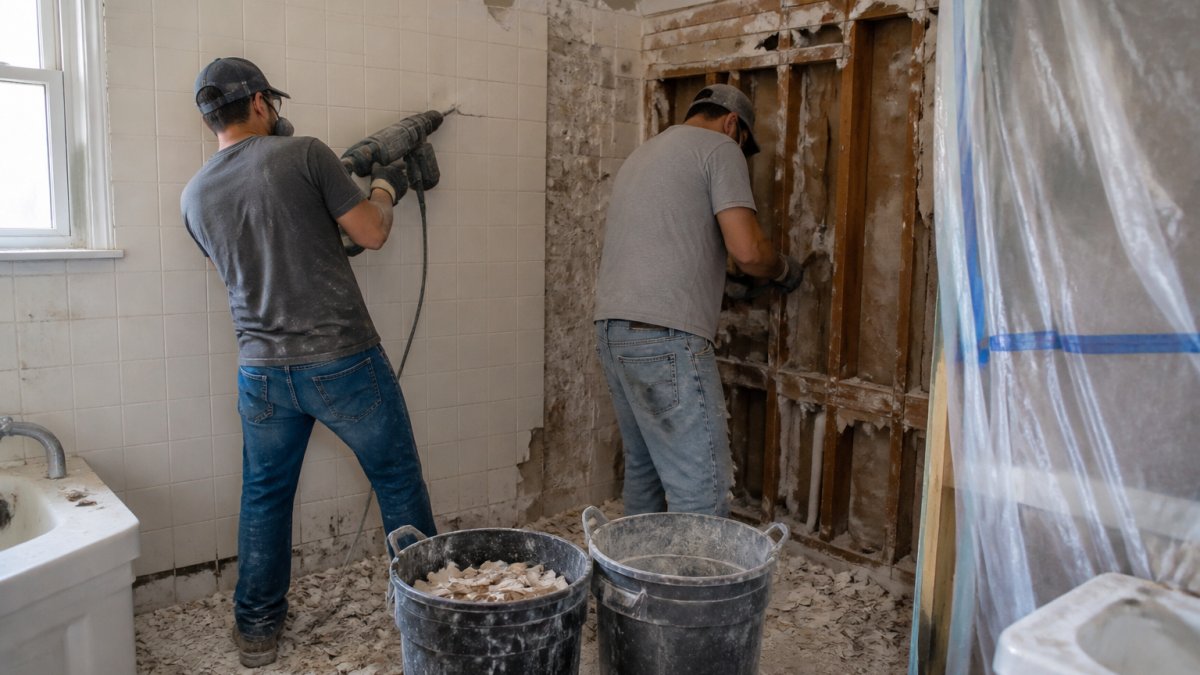
Weeks 1-2: Demolition and Removal
Demolition is the first visible phase after permits are approved, when your contractor removes old fixtures, tile, flooring, and drywall.
What happens:
- Old toilet, vanity, and sink are removed
- Tile and flooring are stripped away
- Walls are opened to access plumbing and electrical
- Debris is hauled out daily to keep the site clean
Demolition typically takes 3 to 5 days, depending on bathroom size and how much is removed.
Expect dust and noise. If your only bathroom is being renovated, plan temporary arrangements elsewhere.
Weeks 3-4: Rough-In Work (Plumbing and Electrical)
After demolition, plumbers and electricians run new lines and wiring, rough-in work that happens before walls are closed up.
Plumbers will:
- Run new supply lines for hot and cold water
- Install drain lines for toilet, sink, and shower
- Rough-in the shower valve and any special fixtures
Electricians will:
- Run new wiring for lights, outlets, and ventilation fan
- Install rough-in boxes for fixtures
- Ensure circuits have proper capacity for heated floors or other features
Rough-in work typically takes 5 to 7 days, followed by the rough-in inspection. If issues are found, they're fixed before the next phase.
Weeks 5-6: Framing, Waterproofing, and Inspections
Once plumbing and electrical are approved, walls are rebuilt and waterproofing is installed.
What happens:
- New drywall or cement board is installed
- Waterproofing membrane is applied to shower walls and wet areas
- Framing changes are completed if needed
- Final inspection for framing and waterproofing
Waterproofing is critical because water damage happens quickly, and proper waterproofing prevents mold and rot behind walls. This phase typically takes 5 to 7 days, including inspection time.
Weeks 7-8: Tile, Flooring, and Fixture Installation
This is when your bathroom starts looking like the final product.
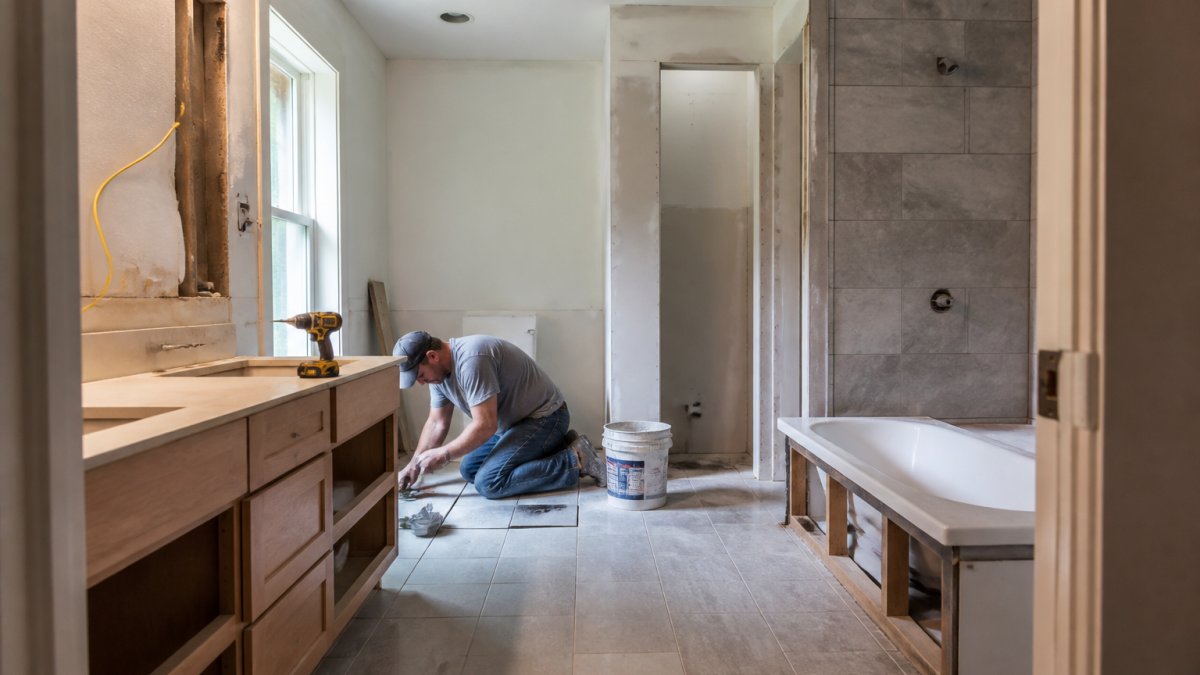
Tile work includes:
- Shower surround tiling
- Floor tile installation
- Backsplash or accent walls
Fixture installation includes:
- Toilet installation
- Vanity and sink installation
- Faucet installation
- Lighting fixture installation
Tile work is detailed, especially with custom layouts or patterns, and flooring installation depends on material type, porcelain tile is faster than natural stone. Weeks 7 and 8 bring the most visible progress.
Weeks 9-10: Painting, Finishing, and Final Touches
The final phase includes painting, caulking, and installing accessories.
What happens:
- Walls and ceiling are painted
- Trim and baseboards are installed
- Caulking is applied around tile and fixtures
- Mirrors, towel bars, and shelves are installed
This phase typically takes 4 to 5 days, followed by a final walkthrough and inspection to confirm everything meets code.
Bathroom Renovation Steps: Hiring and Coordinating Contractors
Your contractor orchestrates the entire timeline, so choosing the right one and communicating clearly prevents delays.
When hiring, ask about:
- Experience with bathroom renovations in your area
- How they handle scheduling and coordination between trades
- Their process for managing changes and unexpected issues
- References from recent bathroom projects
A licensed contractor manages the subcontractors, plumbers, electricians, tile specialists, and schedules them in the right sequence. Poor coordination between trades is one of the biggest causes of delays.
Before work starts, confirm:
- The start date and expected completion date
- Who's responsible for ordering materials
- How change orders are handled if unexpected issues arise
- Communication frequency during the project
Clear expectations upfront prevent misunderstandings that kill timelines.
Bathroom Remodel Checklist: What to Track and Prepare
A bathroom renovation checklist keeps you organized and prevents forgotten details.
Pre-Construction Checklist
Before demolition begins:
- All permits are approved and on-site
- Materials are ordered and delivery dates confirmed
- Temporary bathroom arrangements are in place
- Valuables and personal items are removed from the bathroom
During-Construction Checklist
During the renovation:
- Daily site cleanup is happening (debris removed, dust contained)
- Rough-in inspection is scheduled and passed
- Materials are arriving on schedule
- Work is progressing according to the timeline
Final Walkthrough and Punch List
Before final payment:
- All fixtures are installed and working
- Tile and flooring are complete with no gaps or cracks
- Paint is smooth with no drips or uneven coverage
- All outlets and switches work
- Lighting is adequate and fixtures are secure
A punch list is a written list of small items that need fixing before final payment. These might be minor paint touch-ups, caulking adjustments, or hardware adjustments. Getting a punch list in writing prevents disputes about what counts as complete.
Common Delays and How to Stay on Schedule
Delays happen on most bathroom renovations. Understanding common causes helps you prevent them or recover quickly.
Material delays are the most common.
Unexpected structural issues emerge during demolition.
Permit delays happen if the building department is backlogged or if initial inspections find issues.
Contractor scheduling conflicts occur when a trade is pulled to another job.
Scope creep kills timelines. You start with a tile update and end up wanting new plumbing and a larger vanity.
To stay on schedule:
- Order materials in the planning phase, not during construction
- Get a detailed written timeline from your contractor with realistic dates
- Confirm all design decisions before work begins
- Build 1 to 2 weeks of contingency time into your overall timeline
- Communicate with your contractor weekly about progress
Living Through Your Bathroom Renovation
A 10-week bathroom renovation affects your daily life. Planning for this reality makes it manageable.
Temporary bathroom arrangements are essential. If your only bathroom is being renovated, you'll need:
- Access to another bathroom (guest room, family member's home, gym)
- Extra time for morning and evening routines
- Supplies stored outside the bathroom (toiletries, towels)
Some homeowners rent a temporary portable bathroom unit to place outside their home.
Dust and noise are unavoidable. Seal off the bathroom from the rest of your home with plastic sheeting to contain dust.
Daily site access is important. Your contractor needs clear access every day. Remove vehicles from the driveway if needed.
A bathroom renovation timeline is predictable when you plan carefully and work with a contractor who communicates clearly. Our approach to scheduling, material ordering, and contractor coordination helps ensure your project stays on track from demolition through final walkthrough. The National Association of Home Builders provides guidance on renovation timelines and best practices.
Frequently Asked Questions
How long does a typical bathroom renovation timeline take from start to finish?
A standard bathroom remodel takes 8-12 weeks from demolition through final completion. Small cosmetic updates may finish in 4-6 weeks, while full gut renovations with layout changes can extend to 12-16 weeks. The timeline depends on project scope, material availability, permit approval speed, and whether unexpected issues like water damage or structural repairs arise during demolition. Clear planning and coordination with your contractor helps keep the bathroom renovation timeline realistic and on track.
What are the main stages of a bathroom renovation?
The key phases are: planning and design (1-2 weeks), permits and approvals (2-4 weeks depending on local requirements), demolition and removal (1-2 weeks), rough-in work for plumbing and electrical (2-3 weeks), framing and waterproofing (1-2 weeks), inspections, tile and flooring installation (2-3 weeks), fixture installation, painting, and finishing touches (1-2 weeks). Each phase builds on the previous one, and delays in earlier stages directly impact the overall bathroom remodel timeline. Ordering materials early and securing permits quickly helps prevent bottlenecks.
What can delay a bathroom remodel?
Common delays include permit approval taking longer than expected, material lead times extending due to supplier backlog, discovering hidden water damage or structural problems during demolition, contractor availability gaps between phases, and unexpected electrical or plumbing code issues. Weather can also affect drying times for paint and sealant. Building in a 10-15% time buffer into your bathroom renovation timeline and maintaining close communication with your contractor helps minimize surprises. Ordering materials before demolition starts is one of the most effective ways to prevent delays.
Can you redo a bathroom for $10,000?
A cosmetic bathroom update, new paint, fixtures, vanity, and hardware, may fit a $10,000 budget, though pricing depends on material choices and local labor rates. A full bathroom remodel with new plumbing, electrical, tile, and flooring typically costs more. The bathroom remodel cost breakdown includes labor, materials, permits, and contingency (usually 10-20% of the total budget). To get an accurate estimate for your specific project, contact a licensed contractor who can assess your scope, materials, and local conditions and provide a detailed quote.